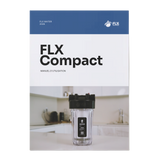
FLX Compact

Your home's water guardian.
The FLX Compact silently watches over every liter of mains water that enters your home, reducing up to 99% of contaminants without electricity or chemicals.
In the box
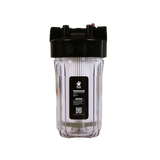
  • FLX Compact FLX CompactThe filter, ready to install
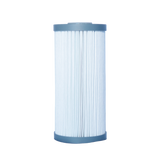
  • FLX cartridge FLX cartridgeHollow fibers, electro-adsorption and activated carbon
  • Cartridge renewal Cartridge renewalIncludedOne cartridge delivered every 4 months (worth €120)
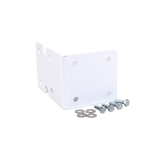
  • Wall-mounting bracket Wall-mounting bracketScrews and washers included
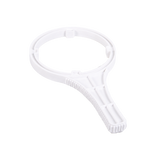
  • Filter housing wrench Filter housing wrenchTo open the housing and change the cartridge
  • Complete manual Complete manualStep-by-step installation and use
You own your FLX CompactNo rental or equipment provision fees. Only the cartridge needs renewing: €120 every 4 months.

€99.99 for the first month (including the €40 equipment provision fee), then €59.99/month.

No commitment: cancel or change at any time. The equipment remains the property of FLX Water.

Klarna. or 4 × 152,25 € interest-free
  • Backed by science
  • Made in France
  • Concours Lépine Medal 2024
Installation
  • Compatibility: mains water only
  • Where: on the home's main water supply
  • Connection: 1" male
  • Required pressure: between 3 and 4 bar
  • Time: 30 minutes to 1 hour
  • Who: you can do it yourself if you are handy. Otherwise, call a plumber.
Dimensions
  • Height: 25.4 cm
  • Diameter: 11.4 cm
  • Weight: 4.5 kg
Materials

NSF and ACS certified materials, guaranteeing safety and quality

Consumables
  • Filter replacement: Every 4 months (3 times a year)
  • Price of a filter: €120 incl. VAT
Shipping and returns
  • Ships within 48 hours
  • Free returns
FLX Compact
609,00 € EUR
Regular price
Unit price
per
Nouveau
Nouveau

FLX Compact

They already filter their water with FLX Water

« I had never drunk tap water before. »

Vincent L.

« I was tired of buying bottled water. »

Céline F.

« When I heard about PFAS, it worried me. »

Marion T.

« I was careful about what I ate, but not about my water. »

Ruben G.
For years, we trusted our water without really asking ourselves any questions...

Yet 28.5% of French people were affected by at least one breach of the quality limits for pesticides.

French Ministry of Health, National report on drinking water quality, December 2025

Official public health monitoring data

What's in your town's water?

Enter the name of your town to see what health inspections found there this year.

For example:
34 812towns covered
4contaminant families
14parameters monitored

Source: SISE-Eaux public health monitoring, French Ministry of Health, supplemented live by the Hub’Eau API (French Office for Biodiversity). Open Licence 2.0. FLX Water performance measured by the CAIRAP and IANESCO laboratories. View the Hub’Eau API

What a glass of water doesn't show

Three contaminants you can neither see nor smell.

Water declared compliant is not water free of residues. Choose a contaminant.

PFAS

“Forever chemicals” break down neither in water nor in the body. Since January 2026, the limit has been 0.1 µg/L for the sum of 20 PFAS.

0 of PFOS removed

Raw water (PFOS) 0.62 µg/L
After the FLX Compact 0.0051 µg/L

CAIRAP, October 2024. Average of 98.4% across the 9 PFAS measured.

The guardian of your water.

It stops what should never reach your glass.

Up to 99% of contaminants reduced

No electricity or chemicals needed to protect your water.

100% autonomous

What it stops in your mains water.

Performance measured and validated by independent laboratories.

Microbiology
-99.9%
  • Escherichia coli (fecal indicator bacteria): >80 /100 mL in raw water → 0 /100 mL after filtration (standard: 0) → 100% removal
  • Total coliforms (contamination indicators) : >80 /100 mL in raw water → 0 /100 mL after filtration (standard: 0) → 100% removal
  • Intestinal enterococci (fecal contamination) : >80 /100 mL in raw water → 0 /100 mL after filtration (standard: 0) → 100% removal
  • Salmonella spp (pathogenic bacteria) : present in raw water → absent after filtration (standard: absence) → 100% removal
  • Sulfite-reducing anaerobic spores (persistent contamination) : present in raw water → not detected after filtration → 100% removal
IANESCO Laboratory • February 2025 View the full report
Physicochemical parameters
-91.7%
  • Turbidity (water clarity): 43 to 75 NTU in raw water → <0.94 NTU after filtration (standard ≤ 2 NTU) → reduction >99%
  • Color (colored suspended matter): 50 mg/L Pt in raw water → 2.5 mg/L Pt after filtration (standard ≤ 15 mg/L) → reduction >95%
  • Total organic carbon (dissolved organic matter): 4 mg/L in raw water → <0.3 mg/L after filtration (standard ≤ 2 mg/L) → reduction >92%
  • Total aluminum (metal, flocculant): 2500 µg/L in raw water → <20 µg/L after filtration (standard ≤ 200 µg/L) → reduction >99%
  • Total iron (metal, taste impairment and coloration): 2100 µg/L in raw water → <10 µg/L after filtration (standard ≤ 200 µg/L) → reduction >99%
  • Total manganese (metal, coloration and deposits): 40 µg/L in raw water → 4 µg/L after filtration (standard ≤ 50 µg/L) → reduction >90%
  • Total arsenic (toxic metalloid): 1 µg/L in raw water → <0.2 µg/L after filtration (standard ≤ 10 µg/L) → reduction >80%
  • Benzo(a)pyrene (polycyclic aromatic hydrocarbon): 0.011 µg/L in raw water → <0.0025 µg/L after filtration (standard ≤ 0.01 µg/L) → reduction >77%
IANESCO Laboratory • February 2025 View the full report
Pesticides
-89.2%
  • Propyzamide (herbicide, amide family): detected in raw water (0.61 µg/L) → <0.010 µg/L after filtration (standard ≤ 0.1 µg/L) → >98% removal
  • Chlorothalonil R471811 (fungicide metabolite): detected in raw water (0.51 µg/L) → <0.040 µg/L after filtration (standard ≤ 0.1 µg/L) → >92% removal
  • Metolachlor ESA (herbicide metabolite): detected in raw water (0.11 µg/L) → <0.020 µg/L after filtration (standard ≤ 0.1 µg/L) → >97.9% removal
  • Metolachlor OXA (herbicide metabolite): detected in raw water (0.063 µg/L) → <0.020 µg/L after filtration (standard ≤ 0.1 µg/L) → >97.9% removal
  • Chlortoluron (urea herbicide): detected in raw water (0.22 µg/L) → <0.020 µg/L after filtration (standard ≤ 0.1 µg/L) → >91% removal
  • Glyphosate (phosphonate herbicide): detected in raw water (0.033 µg/L) → <0.030 µg/L after filtration (standard ≤ 0.1 µg/L) → >90% removal
  • Prosulfocarb (carbamate herbicide): detected in raw water (0.12 µg/L) → <0.030 µg/L after filtration (standard ≤ 0.1 µg/L) → >75% removal
  • Flufenacet ESA (herbicide metabolite): detected in raw water (0.14 µg/L) → <0.020 µg/L after filtration (standard ≤ 0.1 µg/L) → >86% removal
CAIRAP Laboratory • October 2024 View the full report
PFAS
-98.4%
  • PFOA: 0.39 µg/L in raw water → <0.0010 µg/L after filtration → >99.7% removal
  • PFOS: 0.62 µg/L in raw water → 0.0051 µg/L after filtration → ~99.2% removal
  • PFNA: 0.27 µg/L in raw water → 0.0014 µg/L after filtration → ~99.5% removal
  • PFHxA: 0.068 µg/L in raw water → <0.0010 µg/L after filtration → >98.5% removal
  • PFHpA: 0.097 µg/L in raw water → <0.0010 µg/L after filtration → >99% removal
  • PFPeA: 0.042 µg/L in raw water → <0.0010 µg/L after filtration → >97% removal
  • PFBA: 0.023 µg/L in raw water → <0.0010 µg/L after filtration → >95% removal
  • PFBS: 0.0089 µg/L in raw water → <0.0010 µg/L after filtration → >88% removal
  • PFPeS: 0.0079 µg/L in raw water → <0.0010 µg/L after filtration → >87% removal
CAIRAP Laboratory • October 2024 View the full report
Chlorine, taste and odor
  • Free chlorine (disinfectant added at the treatment plant): this is what gives tap water its swimming-pool smell. The activated carbon adsorbs it from all the water entering the house, not just at the kitchen sink.
  • Chloramines (disinfection by-products): responsible for a metallic or medicinal taste, more noticeable at the end of the network.
  • Volatile organic compounds (earthy, muddy or musty tastes): they come from the water source itself and vary with the seasons.
  • Why there is no percentage here: taste and odor are assessed through sensory analysis, not in µg/L. Our two laboratories were not commissioned for this aspect, so we prefer not to put forward a figure.
Activated carbon, the cartridge's third medium

Values preceded by < correspond to the laboratory's limit of quantification; actual reductions are at least equal to those shown.

Packs of plastic water bottles

What it saves you

Every year, after cartridge costs.

… €

in net savings per year

Your FLX Compact pays for itself in {mois} months.

Basis: 2 L of drinking water per person per day, i.e. 1.33 bottles of 1.5 L. After deducting €360 of cartridges per year (3 × €120). Payback calculated on a direct purchase at €609.

BACKED BY SCIENCE

Proven protection.

Behind each of its actions lies a technology combining hollow fibers, electro-adsorption and activated carbon, tested and validated by independent laboratories. It is designed for mains water, the water from the public network.

Image
Image
Image
It knows what to stop.

Three media in a single cartridge: hollow fibers calibrated to 0.1 µm, electro-adsorption and activated carbon. The first two reduce up to 99% of targeted contaminants, including PFAS, pesticides, bacteria, viruses and heavy metals. The activated carbon retains chlorine and the compounds responsible for taste and odor: it is the only effect you notice from the very first glass.

Image
Each performance is verified.

The performance of the FLX Compact is measured and validated by the independent laboratory IANESCO.

Image
Built to last. Certified to protect.

All components used meet the requirements of NSF and ACS certifications.

Image
It knows what to stop.

Three media in a single cartridge: hollow fibers calibrated to 0.1 µm, electro-adsorption and activated carbon. The first two reduce up to 99% of targeted contaminants, including PFAS, pesticides, bacteria, viruses and heavy metals. The activated carbon retains chlorine and the compounds responsible for taste and odor: it is the only effect you notice from the very first glass.

Image
Each performance is verified.

The performance of the FLX Compact is measured and validated by the independent laboratory IANESCO.

Image
Built to last. Certified to protect.

All components used meet the requirements of NSF and ACS certifications.

Simple installation in 3 steps.

Image
Image
Image
Image
01

1. Connect

your main water supply to the FLX Compact and connect the outlet to your home.

Image
Image
02

2. Turn on

the taps again to fill the filtration system with water.

Image
Image
03

3. Enjoy

filtered water instantly throughout your home for drinking, cooking and washing.

Image
Image
Image
01

1. Connect

your main water supply to the FLX Compact and connect the outlet to your home.

Image
Image
02

2. Turn on

the taps again to fill the filtration system with water.

Image
Image
03

3. Enjoy

filtered water instantly throughout your home for drinking, cooking and washing.

You're handy

You can install it yourself on the main water supply: 1-inch male connection, no electrical hookup, 30 minutes to 1 hour.

You'd rather not touch it

Any plumber can do it: it's a standard installation on the water supply, with no electrical connection or drain to add.

The FLX Compact connects to a mains water supply. It is not designed for well water, borehole water or harvested rainwater.

Not all solutions protect you the same way.

The FLX Compact compared with other solutions on the market

 
FLX Compact
Filter pitcher
Reverse osmosis system
Treats the whole home
Instantly filtered water, no tank
Simple maintenance: one cartridge to replace
Installation with no drain to add
No pump or electricity required
No wastewater sent down the drain
Keeps the water's minerals
PFAS
Pesticides
Heavy metals (lead, copper, iron)
Pharmaceutical traces
Herbicides
Chlorine
Viruses
Bacteria
Endotoxins
Chemical reduction

What our customers say

FLX Compact installed on the main water supply at Sébastien K.'s home

We drink tap water and no longer buy bottled water. I filter out what isn't yet monitored in “drinking” water (pesticides, heavy metals, pharmaceutical residues, PFAS) to turn it into water that's truly good to drink, and I treat the whole house in one go, whereas a reverse osmosis system only covers the kitchen sink.

Sébastien K.

As featured in

Still have a question?

When should the filter be changed?

We estimate that the filter should be changed every 4 months, or 3 times a year. This estimate depends on your water consumption and its initial quality.

How does the machine work?

The hollow fiber and electro-adsorption cartridge, combined with activated carbon, captures contaminants using your water mains pressure, while preserving the minerals naturally present in the water.

How much does a filter cost?

The price for a filter is €120 incl. VAT. After your first order, you will be contacted to access a page dedicated to renewing your consumable.

Does the machine filter rainwater?

No, the FLX Compact solution is exclusively dedicated to the drinking water network.

How do I connect the FLX Compact to my water supply?

The machine connects to your home's main water supply.
It is preferable to connect it after your water softener, if you have one, and before your sanitary heating unit (heat pump, boiler, etc.). There is no electrical connection; water pressure alone is sufficient.

Does the FLX Compact reduce limescale in water?

The FLX Compact is not a water softener: removing limescale is not its primary function. That said, its filtration is very fine, so some of the particles responsible for hardness are retained along the way. To treat limescale properly, you need a water softener, installed upstream of the FLX Compact.

Can I install the FLX Compact myself?

Yes, if you're reasonably handy. It fits on the home's main water supply with a 1-inch male connection and no electrical hookup at all. Allow 30 minutes to 1 hour. If you'd rather not touch it, any plumber can do it.

What water pressure does my system need?

Between 3 and 4 bar, which is the pressure of the vast majority of municipal water networks in France. No pump is needed: your network's pressure is what drives the water through the cartridge.

Does the FLX Compact remove PFAS?

Yes. Across the 9 PFAS measured by the CAIRAP laboratory, the average reduction is 98.4%. PFOS drops from 0.62 µg/L in raw water to 0.0051 µg/L after filtration, well below the 0.1 µg/L limit set since January 2026 for the sum of 20 PFAS.

Who carries out your tests?

Two independent laboratories: CAIRAP (October 2024) for PFAS and pesticides, and IANESCO (February 2025) for microbiology and physicochemical parameters. The full report can be downloaded from the “What it stops” section.

Built to last. 5-year warranty. B u i l t t o l a s t . 5 - y e a r w a r r a n t y .

14 days to try it. 5 years to trust it.